January 31, 2026 / 7:30 p.m.
The Symphony welcomes acclaimed clarinetist Anthony McGill for an emotionally powerful evening featuring Tchaikovsky’s Symphony No. 6.
Program
Quinn MASON
Shine Time
Malek JANDALI
Clarinet Concerto (Anthony McGill)
PYOTR ILYICH TCHAIKOVSKY
Symphony No. 6
Program Notes
Shine Time
Quinn Mason
Born: 1996, Dallas, Texas
Composed: 2024
Premiered: January 18, 2025,
Plano Symphony Orchestra with
Héctor Guzmán conducting
Duration: 7 minutes
Shine Time was commissioned by the Plano Symphony Orchestra, with generous support from Charles and Tammy Miller, in honor of music director Héctor Guzmán and his 41 fruitful seasons with the orchestra. In composing this work, I sought to create a showpiece that celebrates the unique chemistry that Maestro Guzmán and the orchestra have, shows off the virtuosity of the Plano Symphony Orchestra, and even pay tribute to the Maestro himself.
— Quinn Mason
Clarinet Concerto
Malek Jandali
Born: December 25, 1972, Waldbröl,
West Germany
Composed: 2019-2021
Premiered: March 9, 2024, Fairfax Symphony Orchestra with Christopher Zimmerman conducting, Center for the Arts, George Mason University
Duration: 26 minutes.
Dedication: “In memory of all victims of injustice.”
Written for Anthony McGill, principal clarinetist of the New York Philharmonic and artistic director of Juilliard’s Music Advancement Program, Jandali’s Clarinet Concerto was completed in 2021 and dedicated to McGill “in memory of all victims of injustice.” Infused with ancient Syrian themes, it continues the composer’s mission to preserve his homeland’s heritage through music.
Reflecting on the work, McGill said, “In the midst of pain and injustice, all we can do is pour our hearts and souls into something beautiful that can live on.” He described feeling “connected to something much greater than myself” through its haunting themes.
Marin Alsop, a longtime collaborator, calls Jandali’s art “deeply moral,” likening his use of Syrian folk elements to Bartók and Dvořák: “The most important part of the story is always the moral.”
Musically, the concerto unfolds from a mysterious orchestral opening into themes drawn from a Syrian wasla and muwashshah, the clarinet’s voice fluttering in virtuosic pleas that symbolize the victims Jandali honors. A final dance, bright and rhythmic, offers a glimpse of light and hope amid darkness.
Echoing UNESCO’s call to safeguard endangered heritage, Jandali describes his mission plainly: “As an American composer with a mission, it is my duty to preserve and present this rich heritage.” His album Concertos, featuring McGill, was named among The Washington Post’s “Best of Classical Music of 2024.”
Symphony No. 6 in
B minor, Op. 74, “Pathétique”
Pyotr Ilyich Tchaikovsky
Born: May 7, 1840, Votkinsk, Russia
Died: November 6, 1893,
St. Petersburg, Russia”
Composed: February–August 1893
Premiered: October 28, 1893,
St. Petersburg with Tchaikovsky conducting
Duration: 45 minutes
Tchaikovsky’s Sixth Symphony arrives like a final confession, premiered just nine days before his sudden death. It is a work in which the composer claimed to have poured out his entire soul.
That it ends not in triumph but in a whispered descent into silence has only deepened the intrigue surrounding both the piece and the tumultuous man who created it.
The subtitle “Pathétique” translates from the Russian as “passionate” or “emotive,” but in Western usage, it has come to imply something closer to “tragic.” Either way, the moniker certainly fits. This is music of intense emotional volatility, charting a course from tenderness and exaltation to anguish and collapse.
The first movement opens in gloom, with low strings murmuring beneath a plaintive bassoon solo. This introduction yields to a dramatic sonata form, where the sweeping lyricism of the first theme contrasts with a yearning second theme reminiscent of Bizet’s “Flower Song” from Carmen. The movement culminates in a shocking outburst, one of the loudest in all of Tchaikovsky, followed by a devastated coda.
What follows is unconventional. The second movement offers a graceful waltz in 5/4 time, elegant but subtly off-kilter. The third movement, a fiery march that seems headed for a jubilant finale, often elicits premature applause. But the real conclusion is the fourth movement: an Adagio lamentoso that returns to the desolate mood of the opening. It closes with a long, agonizing diminuendo, the life of the music slowly extinguished.
Though speculation continues over the circumstances of Tchaikovsky’s death, whether accidental or otherwise, the Sixth remains beyond biographical reduction. Its searing honesty and formal daring anticipate the existential symphonies of Mahler and Shostakovich. A requiem in all but name, the “Pathétique” remains one of the most personal and profoundly moving statements in the orchestral oeuvre.
About Anthony McGill, Clarinet
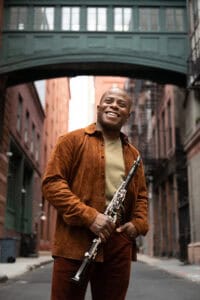
*Photo by Martin Romero
Clarinetist Anthony McGill, praised for his “trademark brilliance, penetrating sound and rich character” (The New York Times), is one of classical music’s most recognizable and multifaceted figures. He serves as Principal Clarinet of the New York Philharmonic—the first African-American principal in the orchestra’s history—and enjoys a dynamic solo and chamber music career.
McGill is the 2024 Musical America Instrumentalist of the Year and recipient of the 2020 Avery Fisher Prize. He appears regularly as a soloist with leading orchestras including the New York and Los Angeles Philharmonics and the Chicago and Detroit Symphonies.
He has released acclaimed recordings with the Pacifica Quartet (American Stories, Mozart & Brahms Quintets), and pianist Gloria Chien (Here With You), and performed at President Barack Obama’s 2009 inauguration. His advocacy for racial equity includes founding the viral #TakeTwoKnees campaign and partnering with Bryan Stevenson and the Equal Justice Initiative, with whom he performed in Montgomery, AL on Juneteenth 2024.
McGill is a faculty member at Juilliard and Curtis, where he directs the Music Advancement Program (MAP), focused on young musicians from underrepresented communities. He helped launch the MAP Summer Scholarship Fund and supported its $50 million Crankstart endowment.
McGill is a graduate of the Curtis Institute, a board member of Cedille Records and the Harmony Program, and an advisor to several youth initiatives. He is a Backun Artist.
Meet the Musicians Here!
Sponsors