
Vivaldi’s Four Seasons meets Piazzolla’s Buenos Aires Seasons in a program that pairs baroque sounds with tango-driven rhythm and edge. Hear each season through two contrasting musical worlds—one crisp and lyrical, the other syncopated and electric. Guest violin duo, Hina and Fiona Khuong-Huu, join the Symphony for this amazing performance!
Program
Alastair Willis, conductor
Hina Khuong-Huu, violin
Fiona Khuong-Huu, violin
Osvaldo GOLIJOV
Last Round
ANTONIO VIVALDI
Spring
ASTOR PIAZZOLLA
Verano Porteño
ANTONIO VIVALDI
Summer
ASTOR PIAZZOLLA
Otoño Porteño
Intermission
ANTONIO VIVALDI
Autumn
ASTOR PIAZZOLLA
Invierno Porteño
ANTONIO VIVALDI
Winter
ASTOR PIAZZOLLA
Primavera Porteño
Composer Key: Composer names in ALL CAPS indicate deceased composers. Composer names in Title Case indicate living composers.
Calendar for The Seasons of Vivaldi + Piazzolla
Last Round
Osvaldo Golijov
Born: December 5, 1960
La Plata, Argentina
Composed: 1996
Premiered: October 25, 1996, Adrian Boult Hall, Birmingham, England, by the Birmingham Contemporary Music Group, Stefan Asbury conducting
Length: 14 minutes
Astor Piazzolla, the last great Tango composer, was at the peak of his creativity when a stroke killed him in 1992. He left us, in the words of the old tango, “without saying good bye”, and that day the musical face of Buenos Aires was abruptly frozen. The creation of that face had started a hundred years earlier from the unlikely combination of African rhythms underlying gauchos’ couplets, sung in the style of Sicilian canzonettas over an accompanying Andalucian guitar. As the years passed all converged towards the bandoneon: a small accordion-like instrument without keyboard that was invented in Germany in the 19th Century to serve as a portable church organ and which, after finding its true home in the bordellos of Buenos Aires’ slums in the 1920s, went back to Europe to conquer Paris’ high society in the 1930s. Since then it reigned as the essential instrument for any Tango ensemble.
Piazzolla’s bandoneon was able to condense all the symbols of tango. The eroticism of legs and torsos in the dance was reduced to the intricate patterns of his virtuoso fingers (a simple C major scale in the bandoneon zigzags so much as to leave an inexperienced player’s fingers tangled). The melancholy of the singer’s voice was transposed to the breathing of the bandoneon’s continuous opening and closing. The macho attitude of the tangueros was reflected in his pose on stage: standing upright, chest forward, right leg on a stool, the bandoneon on top of it, being by turns raised, battered, caressed.
I composed Last Round in 1996, prompted by Geoff Nuttall and Barry Shiffman. They heard a sketch of the second movement, which I had written in 1991 upon hearing the news of Piazzolla’s stroke, and encouraged me to finish it and write another movement to complement it. The title is borrowed from a short story on boxing by Julio Cortázar, the metaphor for an imaginary chance for Piazzolla’s spirit to fight one more time (he used to get into fistfights throughout his life). The piece is conceived as an idealized bandoneon. The first movement represents the act of a violent compression of the instrument and the second a final, seemingly endless opening sigh (it is actually a fantasy over the refrain of the song My Beloved Buenos Aires, composed by the legendary Carlos Gardel in the 1930s). But Last Round is also a sublimated tango dance. Two quartets confront each other, separated by the focal bass, with violins and violas standing up as in the traditional tango orchestras. The bows fly in the air as inverted legs in crisscrossed choreography, always attracting and repelling each other, always in danger of clashing, always avoiding it with the immutability that can only be acquired by transforming hot passion into pure pattern.
— Osvaldo Golijov
The Four Seasons for Violin and Orchestra, Op. 8, Nos. 1–4
Antonio Vivaldi
Born: March 4,1678, Venice, Italy
Died: July 28,1741, Vienna, Austria
Composed: 1723 or earlier; first published in Amsterdam in 1725
Length: 42 minutes
Few works are as instantly recognizable as Antonio Vivaldi’s The Four Seasons, yet this familiarity can often obscure how inventive these concertos were in their own time. Published in Amsterdam in 1725, they form the opening four works of Vivaldi’s Opus 8 collection, titled Il cimento dell’armonia e dell’inventione – The Contest Between Harmony and Invention. The title captures the music’s essential balance: established concerto form meeting vivid, often startling musical ingenuity.
Each season is a separate violin concerto organized in three movements, following a fast-slow-fast pattern typical of concerti from this era. In the outer movements, recurring orchestral passages provide thematic landmarks while the soloist ventures into freer, more virtuosic episodes. This dialogue between stability and adventure gives the music its momentum. Vivaldi then uses that framework to illustrate the four seasons in remarkable detail.
Four Italian sonnets accompanied the published score and may have been written by Vivaldi himself. Their images are matched so closely to the music that the score includes captions identifying particular events. “Spring” opens with birds calling to one another above murmuring streams before thunder briefly interrupts the celebration. In the slow movement, a goatherd sleeps while rustling leaves surround him and a persistent viola figure represents his barking dog. A pastoral dance completes the concerto.
“Summer” is more oppressive. The music seemingly wilts under the intense heat, insects swarm, and gathering winds unsettle a fearful shepherd. His anxiety erupts in the finale as thunder and hail tear across the landscape. “Autumn” begins with a harvest celebration whose increasingly unsteady rhythms suggest revelers overcome by wine. After they fall asleep in the quiet middle movement, the finale depicts a hunt with horns, pursuit, and racing figures.
“Winter” begins with shivering repeated notes, stamping feet, and chattering teeth. The Largo moves indoors, where the violin sings peacefully beside the fire while plucked strings suggest rain outside. The finale returns to the elements: cautious steps cross the ice, skaters slip and fall, the surface cracks, and competing winds sweep the year toward its close.
Vivaldi’s achievement lies not simply in imitating nature, but in turning physical sensations into musical drama. Weather becomes rhythm, temperature becomes harmony, and human movement becomes violin technique. Three centuries after their publication, The Four Seasons remain fresh because their pictures are immediate, their structures clear, and their theatrical energy irresistible.
Cuatro Estaciones Porteñas
(The Four Seasons of Buenos Aires)
Astor Piazzolla
Arranged for solo violin and string orchestra by Leonid Desyatnikov
Born: March 11, 1921, Mar del Plata, Argentina
Died: July 4, 1992, Buenos Aires, Argentina
Composed: 1965–70; arranged by Desyatnikov in 1996–98
Premiered: May 9,1970, Teatro Regina, Buenos Aires, performed by Piazzolla
and his quintet
Length: 25 minutes
The title Cuatro Estaciones Porteñas promises something more specific than a second Four Seasons. Porteño—porteña in its feminine form here—literally suggests “of the port” and has become the familiar term for a person or thing belonging to Buenos Aires. Piazzolla’s seasons are therefore not universal landscapes but urban portraits: four views of weather, memory, movement, and human life in Argentina’s capital.
The pieces were not originally conceived as a unified cycle. Piazzolla composed Verano Porteño in 1965 as incidental music for Alberto Rodríguez Muñoz’s play “Melenita de oro.” Otoño, Invierno, and Primavera followed between 1969 and 1970. Piazzolla eventually performed the four together with his celebrated quintet of bandoneón, violin, piano, electric guitar, and double bass. The cycle received its first complete performance in Buenos Aires in May 1970.
This scoring placed the works firmly within nuevo tango, the language Piazzolla developed by combining tango’s characteristic rhythms and gestures with elements of jazz, classical counterpoint, and extended concert forms. Traditionalists sometimes resisted his innovations, but Piazzolla insisted that tango could grow without abandoning its identity. These seasons pulse with that productive tension: elegance meets grit, lyricism interrupts driving rhythm, and moments of introspection suddenly flare into physical energy.
Russian composer Leonid Desyatnikov created the widely performed arrangement for solo violin and string orchestra in the late 1990s. His version strengthens the conversation with Antonio Vivaldi by adding recognizable fragments of the earlier Four Seasons and shaping Piazzolla’s tangos into broader, three-part structures. The references also acknowledge geography. Because Argentina lies in the Southern Hemisphere, Buenos Aires summer coincides with European winter; Desyatnikov accordingly allows echoes of Vivaldi’s “Winter” to surface within Verano Porteño.
The solo violin becomes both singer and dancer. It slides between notes, snaps out syncopated accents, spins improvisatory flourishes, and occasionally retreats into intimate song. The strings answer with percussive attacks, walking bass lines, sighing harmonies, and the push and pull of tango partners.
Performance order varies, reflecting the movements’ beginnings as independent works. Whatever their sequence, the four pieces form an emotional year rather than a literal calendar. Piazzolla’s Buenos Aires can be sultry, restless, lonely, or newly alive. Its seasons are measured not only by temperature and light, but by the changing inner weather of the people who inhabit the city.
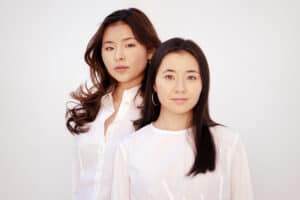
Photo by: Frans Jansen
As a violin duo, these gifted New York-born sisters bring their shared artistry to the stage, their playing revealing a profound connection shaped by lifelong collaboration, honest artistic dialogue, and complementary interpretations. Named “VC Artists” by The Violin Channel, Hina & Fiona have been praised for performing “as though sharing one breath-two violins in a vibrant dialogue of color, clarity, and heart.” Their critically acclaimed debut album, Dear to Us, released on Pentatone, has further established them as a compelling and unified artistic voice. BBC Music Magazine noted that “their playing in unison could almost fool you into thinking that you were listening to a single player.”
They have also achieved significant milestones individually: Hina won first prize at the 2023 Elmar Oliveira International Violin Competition, while Fiona debuted with the New York Philharmonic at age 16, and both continue to embark on illustrious solo careers.
Hina has performed worldwide as a soloist and collaborator with leading ensembles and recently made her acclaimed Kennedy Center debut. Last season, she debuted with the Binghamton Philharmonic, Atlantic Classical Orchestra, and Boston’s Bach, Beethoven & Brahms Society, while continuing collaborations with the Jupiter Symphony Chamber Players. She performs on the 1722 Stradivari “Lord Wandsworth” violin, on loan from the Ryuji Ueno Foundation, and studies at Columbia University and the Juilliard School with Midori Goto and Itzhak Perlman.
Fiona is a recipient of the 2022 Arkady Fomin Scholarship Fund and a career grant from Salon De Virtuosi. She made her debut with the New York Philharmonic at age 16 in David Geffen Hall, performing the Mendelssohn Concerto under the baton of Maestro Thomas Wilkins. Fiona studies with Professor Ilya Kaler at the Cleveland Institute of Music and was previously a student of Itzhak Perlman in the Juilliard Pre-College Division. She has worked with renowned artists including Menahem Pressler, Ivry Gitlis, Shlomo Mintz, Maxim Vengerov, and Vadim Gluzman.
Can’t make it to a Mosaic concert in person? Tune in to 88.9 WSND-FM for the rebroadcast of The Seasons of Vivaldi + Piazzolla. Listen on Sunday, November 8 at 2:00 p.m., and experience the music from wherever you are!
The June H. Edwards Mosaic Series is proudly sponsored by

DeBartolo Performing Arts Center
100 Performing Arts Center
University of Notre Dame
South Bend, IN 46556-4600